


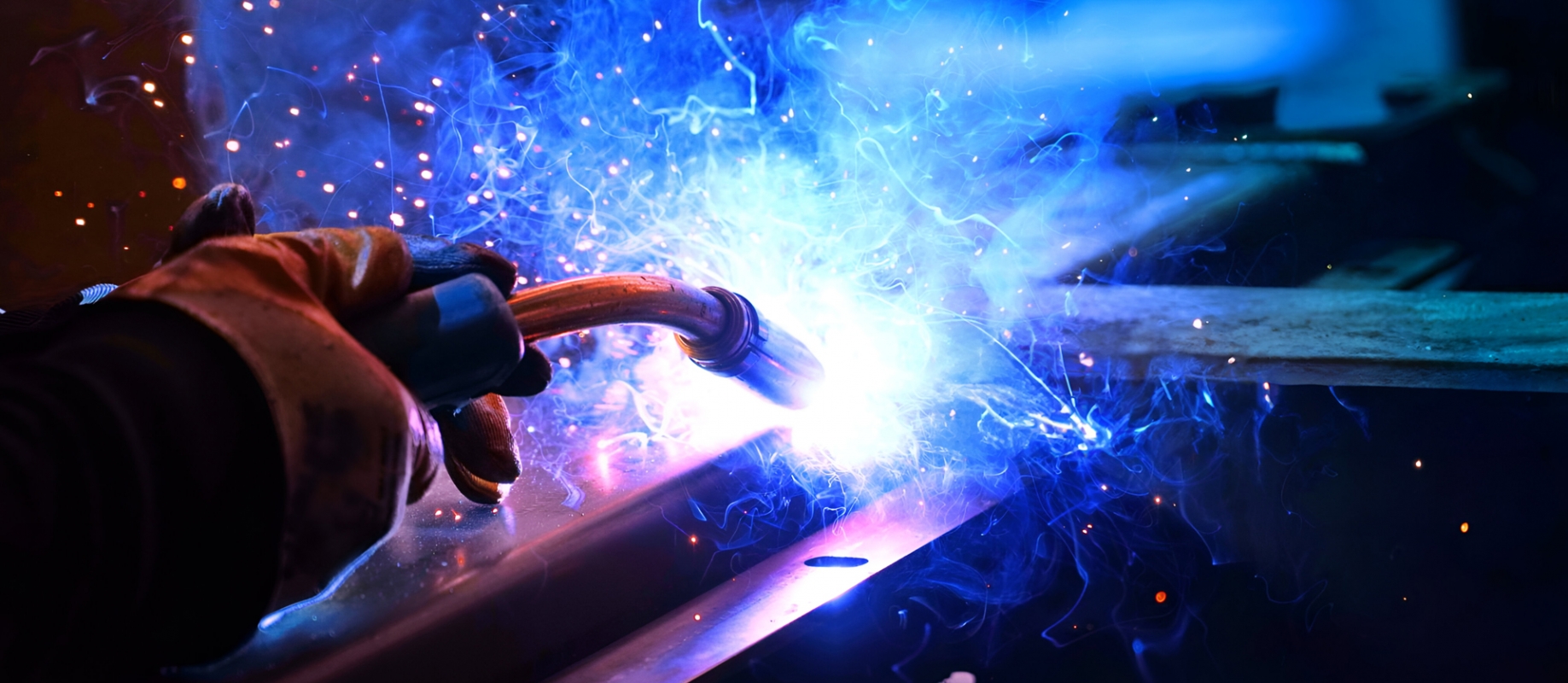
Welding
Contract Wear-Resistant Hardfacing Service
Specialized weld overlay process depositing high-hardness alloys onto new or worn metal parts subjected to extreme abrasion, impact, friction, and thermal-chemical attack.


Metal Restoration & Lifespan Extension
Looking for a specialized partner for contract wear-resistant hardfacing? Our fabrication shop offers an advanced hardfacing service, a special welding technique designed to protect or rebuild mechanical components subjected to severe abrasion, impact, friction or thermochemical corrosion.
Subcontracting for heavy industry has given us deep metallurgical expertise. Using special filler materials and ultra-high-performance alloys, we apply protective layers to new components to extend their service life, or rebuild worn parts back to the nominal dimensions of the technical drawing. The result for your company? A drastic reduction in maintenance costs and machine downtime.
What Is Wear-Resistant Hardfacing and What Are Its Industrial Advantages
Hardfacing consists of depositing, by electric arc (manual or semi-automatic), one or more layers of a highly resistant metal alloy onto a less noble base material (usually carbon or low-alloy steel). This way, the core of the part keeps the toughness needed to absorb impacts, while the outer surface gains exceptional hardness.
Entrusting your hardfacing work to our contract service offers immediate economic and operational advantages:
Service Life Extended up to 10 Times
Hardfaced components show far greater wear resistance than standard untreated parts, reducing how often they need replacing.
Significant Material Cost Savings
Instead of making an entire component from expensive, exotic solid alloys, we use a common, tough structural steel as the base and limit the costly premium alloy to the actual wear points.
Sustainable Regeneration & Rebuilding
Don't throw away worn parts. Hardfacing lets us rebuild lost metal volume and restore the component to its original drawing dimensions, saving you the cost of a new spare part.
Less Machine Downtime
More durable components mean plants that run longer without maintenance stops, increasing your company's overall productivity.
Industrial Application Sectors (Harsh Environments)
Our contract service actively supports companies operating in the most severe operating and application conditions:
Quarries, Mines & Cement
Recycling & Waste Treatment
Construction, Drilling & Foundations
Steel & Energy Industry
Frequently Asked Questions (FAQ)
Which materials, hardfacing alloys and hardness levels do you handle?
How does your technical-metallurgical workflow work?
Are hardfaced components delivered rough or finish-machined?
Are surface micro-cracks (cross-checking) normal on hardfacing overlays?
Request more information Wear-Resistant Hardfacing
To request more information about our services or receive a quotation, please fill in the form below.
Phone
Address
Via Palù, 34, 36040
Grumolo delle Abbadesse
(VI) Italy
Related processes
Discover the related processes.
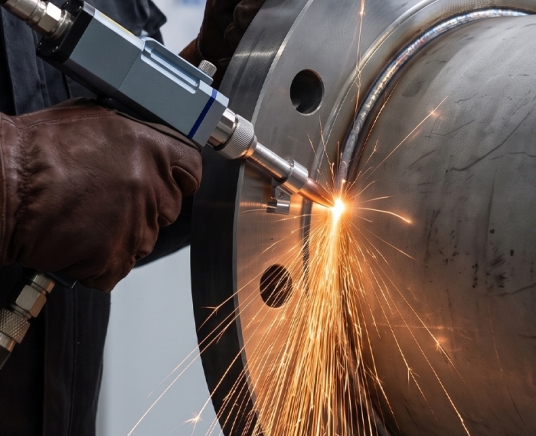
Handheld Laser Welding
We offer a cutting-edge joining service using fiber laser welding technology to join metals with precision, cleanliness and structural strength far superior to traditional systems.
Advantages: minimal Heat-Affected Zone (HAZ), no distortion or cosmetic defects, no subsequent finishing or grinding costs.
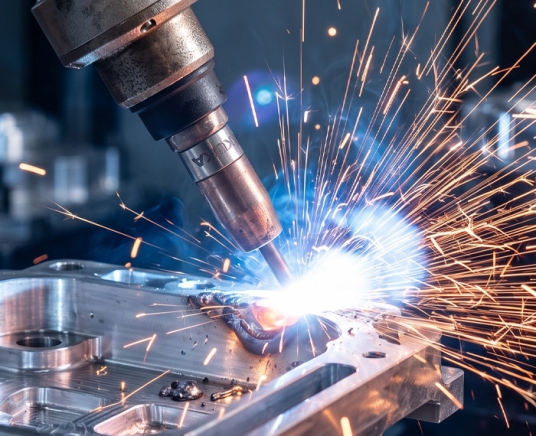
Robotic Welding
Our fabrication shop offers automated welding cells with latest-generation articulated robots, designed to handle medium and large industrial series with millimeter precision.
Advantages: total repeatability (zero scrap), structurally perfect welds part after part, lower labor costs and drastically shorter delivery lead times.
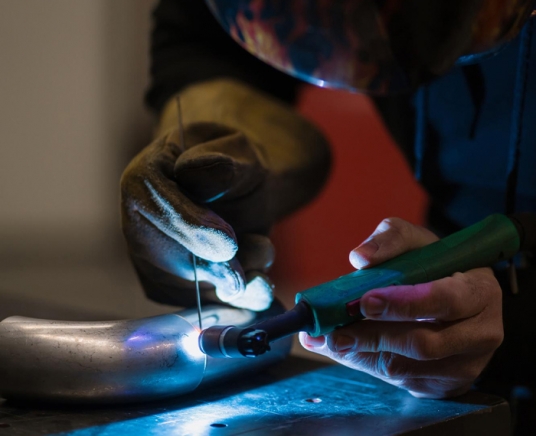
TIG Welding
The absolute benchmark when joint quality, hermetic sealing and flawless appearance are the order's priority. We perform arc welding with a non-consumable tungsten electrode and Argon gas.
Advantages: certified hermetic joints, maximum penetration, zero porosity and full compliance with the dimensional tolerances of technical drawings.