


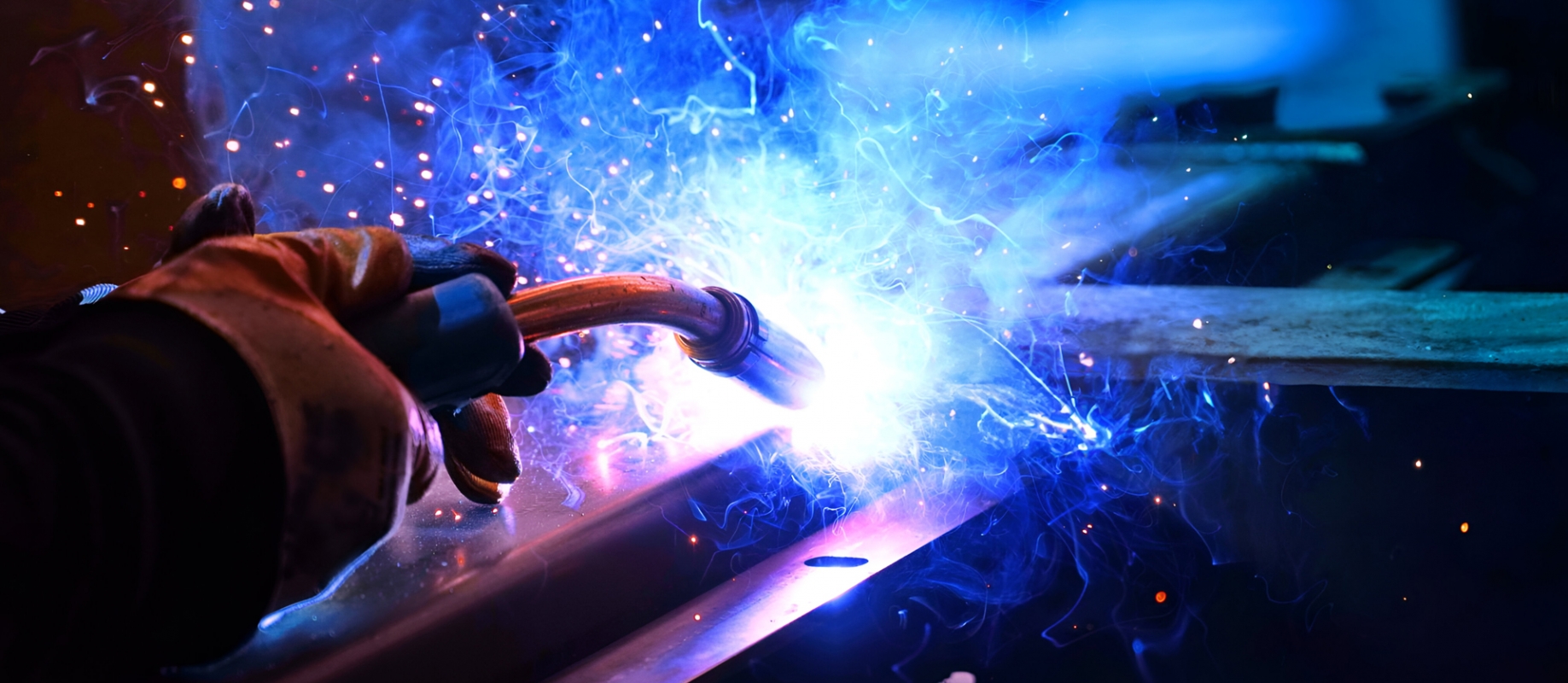
Welding
Contract Stick Electrode Welding (MMA) Service
The benchmark manual welding process for ultra-high mechanical strength on thick structural steel plates, special alloy steels, and heavy load-bearing structures.
Maximum Integrity for Heavy Steelworks
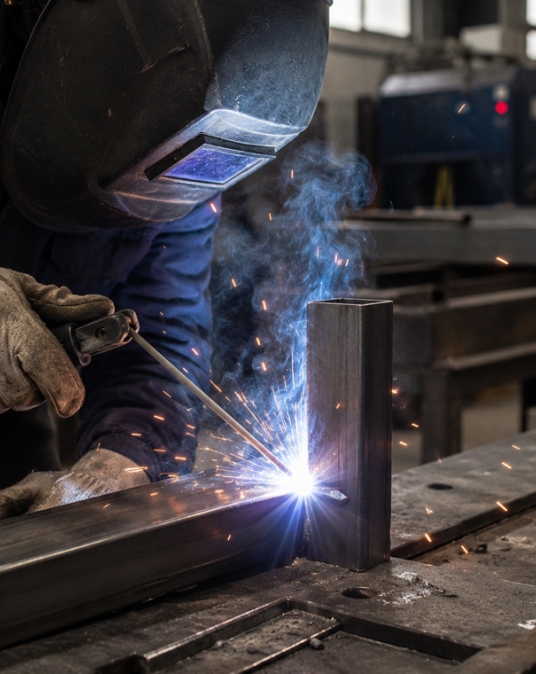
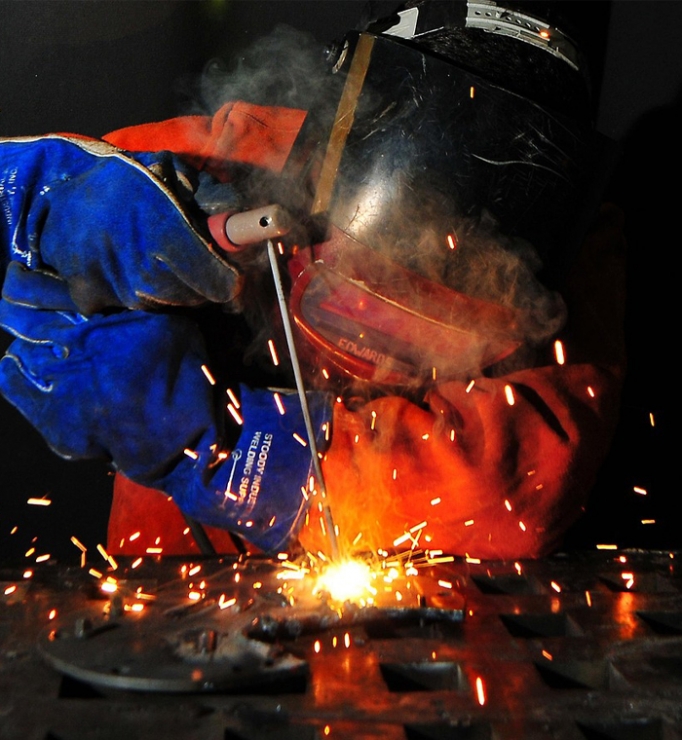
Looking for a qualified partner for contract stick electrode welding? Our fabrication shop offers a highly specialized joining service using the MMA (Manual Metal Arc) process, the benchmark technology for maximum structural strength on thick sections, special steels and structures designed to bear extreme mechanical loads.
Despite the introduction of automated processes, coated electrode welding remains irreplaceable for heavy structural applications, on-site work and complex industrial maintenance. Choosing us as your subcontracting partner means relying on professional welders with recognized qualifications, working in full compliance with current standards (such as EN ISO 9606) and the strictest non-destructive testing.
What Is MMA Welding and What Are Its Advantages for Heavy Structures
Coated electrode welding is a manual process in which the electric arc strikes between the electrode (which acts as filler material) and the workpiece. As it melts, the electrode coating creates a protective slag and a gas shield that effectively protect the weld pool from atmospheric contamination.
Entrusting your structural and heavy fabrication projects to our contract service guarantees unique technical advantages:
Deep Penetration & Unmatched Mechanical Strength
The ideal process for joining thick plates, beams and profiles. It delivers deep, structurally sound joints that withstand tension, torsion and continuous vibration.
Versatility in Any Condition (Even Outdoors)
Unlike MIG or TIG, which require a shielding gas cylinder and are highly sensitive to drafts, stick welding is not affected by wind. This lets us work effectively outdoors or directly on site.
Suitable for Difficult Metals & Imperfect Surfaces
The MMA process tolerates light traces of oxide, mill scale or zinc better than other technologies, still producing a sound, defect-free joint after proper mechanical preparation.
Wide Choice of Coatings for Specific Needs
We use basic electrodes (for maximum mechanical strength and low-temperature toughness), rutile electrodes (for better appearance and arc fluidity) or cellulosic electrodes, depending on the project's technical specifications.
Industries That Require MMA Welding
We supply stick-welded parts and subcontracting services to the most demanding structural and industrial sectors:
Infrastructure & Civil Construction
Mining & Earthmoving
Heavy Industrial Plants
Shipbuilding & Railways
FAQ & Technical Insights
Which materials and metal alloys do you weld with coated electrodes?
How are joints prepared in heavy fabrication?
How do you prevent cold cracking on thick steel plates?
Basic vs. Rutile Electrodes - What is the difference?
Request more information Stick Electrode Welding (MMA)
To request more information about our services or receive a quotation, please fill in the form below.
Phone
Address
Via Palù, 34, 36040
Grumolo delle Abbadesse
(VI) Italy
Related processes
Discover the related processes.
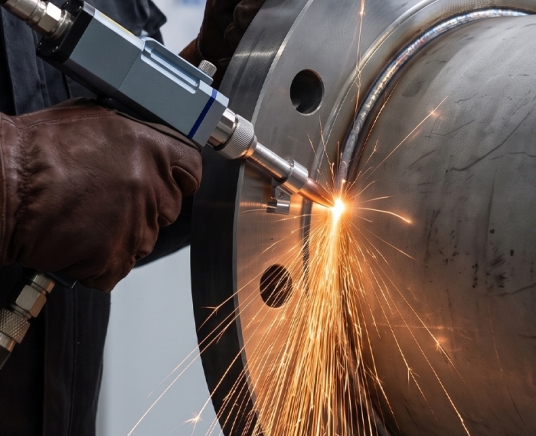
Handheld Laser Welding
We offer a cutting-edge joining service using fiber laser welding technology to join metals with precision, cleanliness and structural strength far superior to traditional systems.
Advantages: minimal Heat-Affected Zone (HAZ), no distortion or cosmetic defects, no subsequent finishing or grinding costs.
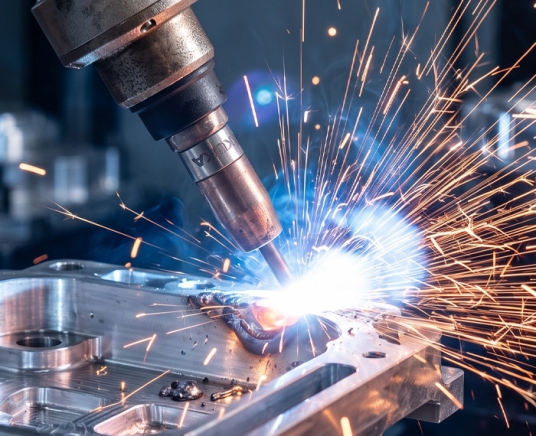
Robotic Welding
Our fabrication shop offers automated welding cells with latest-generation articulated robots, designed to handle medium and large industrial series with millimeter precision.
Advantages: total repeatability (zero scrap), structurally perfect welds part after part, lower labor costs and drastically shorter delivery lead times.
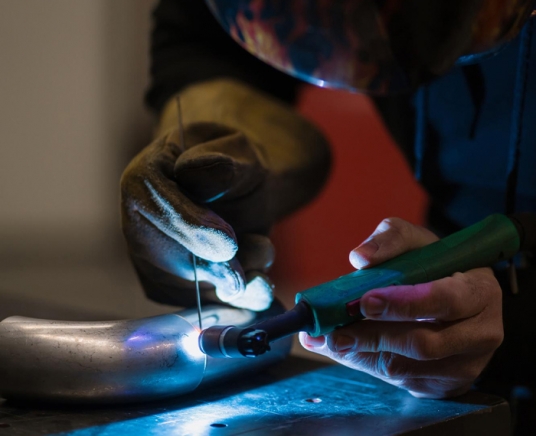
TIG Welding
The absolute benchmark when joint quality, hermetic sealing and flawless appearance are the order's priority. We perform arc welding with a non-consumable tungsten electrode and Argon gas.
Advantages: certified hermetic joints, maximum penetration, zero porosity and full compliance with the dimensional tolerances of technical drawings.